
For more than 14 years, travellers between Zimbabwe and the United Kingdom have relied on connecting flights through hubs such as Dubai, Doha, Addis Ababa, Nairobi, Amsterdam, and Johannesburg. Now, reports suggest that Air Zimbabwe could be preparing to return to the London market with direct flights between Harare and London Gatwick. While the airline has not yet made an official public announcement about schedules, fares, or aircraft, several developments have generated significant interest among travellers in Zimbabwe, the United Kingdom and beyond. Here’s what we know so far.
Air Zimbabwe and London: A Historic Route
London was once one of Air Zimbabwe’s flagship international destinations. The airline operated flights to the UK for many years before suspending the route in 2012. Since then, direct flights between Zimbabwe and the United Kingdom have been unavailable, forcing passengers to connect through third-country hubs. The prospect of a nonstop service is therefore generating excitement among leisure travellers, business passengers, and the Zimbabwean diaspora. If the route launches successfully, it would represent Air Zimbabwe’s return to one of its most important long-haul markets in more than 14 years.
A Sighting at Gatwick Airport departure board
Adding to the speculation, a member of the Tripenger team recently observed an interesting entry on a departure information display while visiting London Gatwick Airport.
The display showed: 18:30 UM725 – Harare “Go to airline desk“
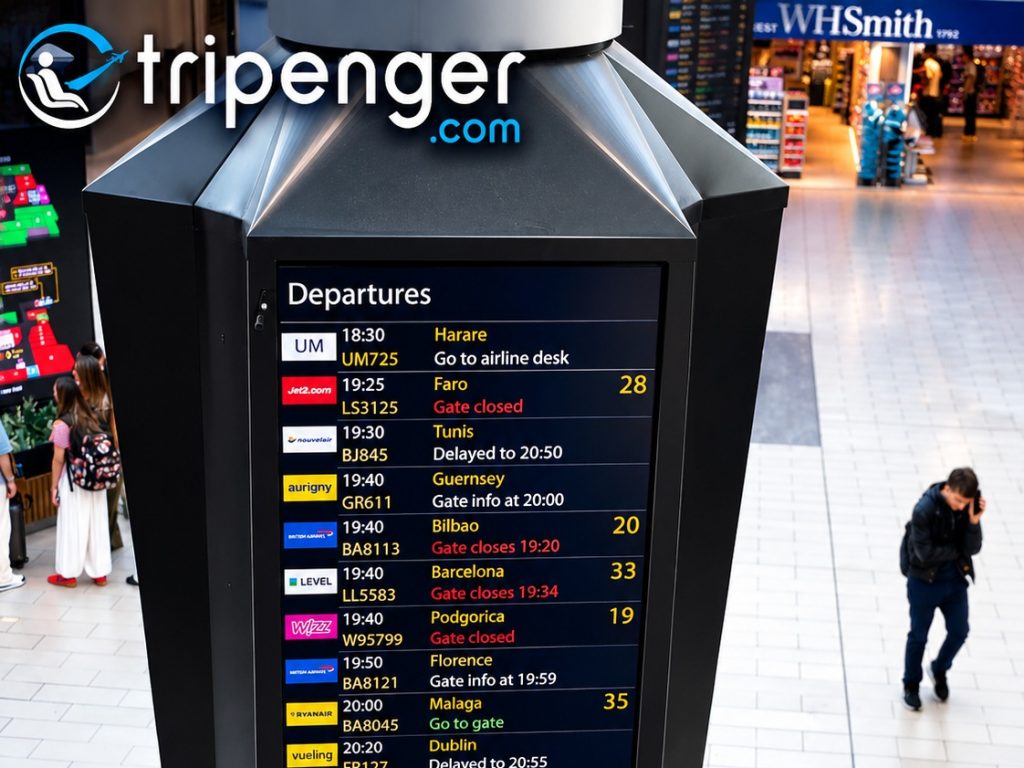
At the time, there was no scheduled departure operating from the airport.
So what does this mean?
The appearance of a flight number on an airport display board does not necessarily confirm that flights have commenced. However, it can indicate that a route has been loaded into airport operational systems or that preparations for future operations are underway.
There are several possible explanations:
- The flight schedule may have been loaded into airport systems in preparation for launch.
- Ground handling and airport operational testing may be taking place.
- The airline may have filed preliminary schedules.
- Airport systems may be displaying placeholder flight information ahead of commercial operations.
While none of these possibilities confirm that flights are imminent, the appearance of UM725 is certainly an interesting development and one that aviation enthusiasts have been discussing closely.
Reports of a Wet Lease Agreement
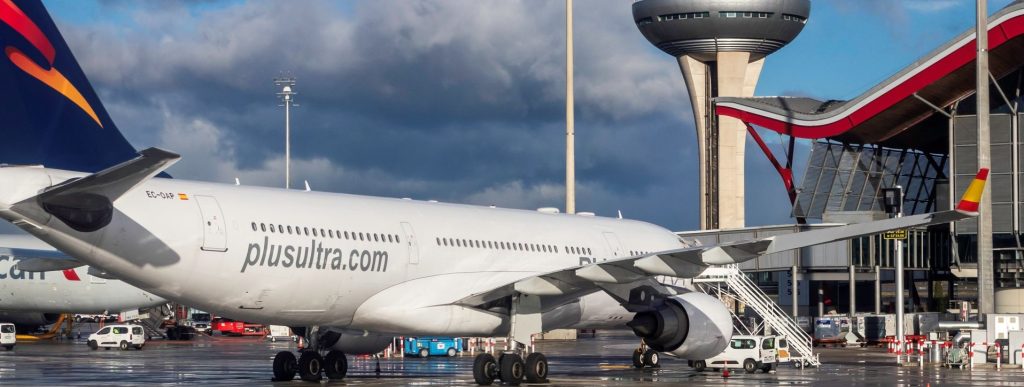
Multiple aviation industry reports have suggested that Air Zimbabwe intends to operate the route through a wet lease arrangement with a European airline. Although Air Zimbabwe has not yet published detailed operating information, reports have linked the planned service to Spanish carrier Plus Ultra Líneas Aéreas.
What Is a Wet Lease?
Many travellers have never heard the term “wet lease” before. In aviation, a wet lease, also known as an ACMI agreement, involves one airline providing: aircraft, crew, maintenance, insurance while another airline (Air Zimbabwe in this case) markets and sells the flights. In practical terms, passengers could purchase tickets from Air Zimbabwe while the aircraft and crew are supplied by another airline. Wet leases are common around the world and are often used when airlines launch new routes, experience fleet shortages, or require aircraft that meet specific regulatory requirements.
Will the Aircraft Be Painted in Air Zimbabwe Colours?
Probably not.
Under most ACMI agreements, aircraft continue operating in the colours and branding of the airline supplying the aircraft. If reports about a wet lease arrangement prove correct, passengers should not be surprised to see an aircraft carrying another airline’s livery rather than Air Zimbabwe’s traditional colours. The flight may still be marketed and sold by Air Zimbabwe, and the flight number would remain an Air Zimbabwe flight number. This is a common practice in international aviation and does not affect the passenger’s ticket or destination.
What Aircraft Could Be Used?
Industry reports have suggested that the Airbus A330-200 may be used on the Harare-London route. The Airbus A330-200 is a long-range, wide-body aircraft designed specifically for intercontinental flights. It is widely used on routes connecting Europe, Africa, Asia, North America, and South America. For passengers, this is generally considered good news.
The aircraft offers:
- A spacious wide-body cabin
- Large overhead storage bins
- Better passenger comfort on long flights
- Good cargo capacity
- Proven reliability on long-haul routes
The Harare-London journey falls comfortably within the aircraft’s operating range, making it a suitable choice for nonstop service.
Looking for flights to Zimbabwe? Compare fares from leading airlines, explore flexible travel dates, and book your next trip with confidence on Tripenger.com from £670 for return flight, you can also view London to Harare flight deals here. We’ll also continue updating this article as more information about Air Zimbabwe’s proposed London service becomes available.
What Passenger Experience Could Travellers Expect?
Although the operating aircraft has not yet been officially confirmed, publicly available information about Airbus A330-200 aircraft operated by Plus Ultra provides an indication of what passengers might experience if those aircraft are eventually assigned to the route.
Business Class
Business Class is typically configured in a 2-2-2 layout.
Passengers can generally expect:
- Wider seats
- Additional legroom
- Greater seat recline
- Enhanced meal service
- Priority services
- Power outlets for electronic devices
While not comparable to the latest enclosed suites offered by some Gulf carriers, the cabin is designed to provide a comfortable overnight travel experience.
Economy Class
Economy Class on the Airbus A330 is generally considered comfortable compared with many modern long-haul aircraft operating at higher seat densities.
Passengers can expect:
- Standard long-haul seating
- Personal entertainment options
- Cabin layouts designed for long flights
- Wide-body comfort throughout the journey
For many travellers, the Airbus A330 remains one of the more passenger-friendly long-haul aircraft in service today.
How Many Seats Does an Airbus A330-200 Have?
Depending on configuration, an Airbus A330-200 typically accommodates between 250 and 300 passengers.
Aircraft operated by airlines in similar configurations often feature:
| Cabin | Approximate Seats |
|---|---|
| Business Class | 20-24 |
| Economy Class | 240-275 |
| Total Capacity | 260-300 |
The actual seating arrangement would depend on the specific aircraft assigned to the route.

Why This Route Matters
A direct Harare-London service would benefit:
- Zimbabweans living in the UK
- Zimbabweans living in Ireland
- Business travellers
- Students
- Tourists
- Friends and family visiting relatives
Removing the need for a connection could significantly reduce travel times and simplify journeys between Zimbabwe and the United Kingdom. For many passengers, avoiding a lengthy transit through a third-country hub would be one of the route’s biggest advantages.
The Bottom Line
At the time of writing, Air Zimbabwe’s return to London remains a developing story. The airline has not yet confirmed every operational detail, and some information circulating online is based on aviation industry reports rather than official announcements. However, the appearance of flight number UM725 at Gatwick Airport, combined with reports of a proposed wet lease arrangement, suggests that preparations may be progressing behind the scenes. Whether flights begin in the coming weeks or months remains to be seen, but there is no doubt that travellers on both sides of the route will be watching developments closely.
Tripenger will continue monitoring the situation and provide updates as more information becomes available.
Disclaimer: Information in this article is based on publicly available reports and observations available at the time of publication. Flight schedules, operating airlines, aircraft types, and launch dates may change. Travellers should consult official airline channels before making travel decisions.
Photo credit: Hero EC-OAP A330 Plus Ultra photo by Bene Riobo